Facing Karma


Rudolf Steiner says, in the chapter entitled “Facing Karma”, from Anthroposophy in Everyday Life (p.54):

We suffer because with every inner and outer suffering we eliminate one of our faults
and become transformed into something better.

Lately I have been thinking a lot about suffering.  I have been thinking a lot about my own challenges in life.  I get very frustrated with my situation sometimes, with the choices I make, how things work out.  I am very frustrated with my career right now, or lack thereof.  I had several recent disappointments in the employment sphere (I have now been passed over TWICE for a job at the Waldorf school), and now I am not sure what I am supposed to do.  What once seemed clear-cut, now doesn’t make sense.  Things seem to have gotten immensely difficult – and yet – things have never been easier.  My current job leaves me with perhaps too much time on my hands, and nothing with which to fill it.  But, I was not any happier when I was over-worked and stressed out because I had too much to do, and not enough time!  Steiner would most likely say that the wiser being in me led me to this situation, but I can’t for the life of me figure out how I will be transformed.  I suppose if I knew that, I wouldn’t need the wiser being!  Just some thoughts on karma . . .

Christmas.

What if you suddenly saw
that the silver of water was brighter than the silver
of money? What if you finally saw
that the sunflowers, turning toward the sun all day
and every day – who knows how, but they do it – were
more precious, more meaningful than gold?


~ Mary Oliver

December 2007Today is Christmas Eve. It’s been ages since I made any effort at noting notable experiences from my life. I figured while Lil was impatiently waiting for 8 o’clock to arrive (family present time), I would just jot down a few thoughts.

I am thankful for so much this year. I am thankful most of all for love. For being loved, for having love to give, for loving what I do, for loving who I know, for loving myself. The year 2007 was unlike any other in so many respects. It was certainly a searching year, a defining year, a year of dreams crushed while others were realized.  This Christmas Eve is the twinkling star of hope at the end of a long journey through a tunnel marked by darkness and fear. I am no stranger to the blackness inside, the desperation.

But, for the first time in probably twenty-six years I am standing outside myself looking at my life and thinking, “That woman is lucky.” I have everything I could possibly have hoped to have by now, and probably a lot more, too. I haven’t done things the traditional way. I seem to be incapable of following that path. But, the choices I have made, wrong or right, have led me to a beautiful place, and I am so happy to be here, with the snow, and the lights, and the gifts, on this cozy Christmas Eve.
December 2007

Mothers.

Damian’s grandmother, Beulah Wilson, passed away last week. Thinking about her passing made me think about my mother, and then about her mother, and about her mother, and her mother, etc.

Here’s six generations of mothers, left to right: Me; my mother, Roxanne; my grandmother, Ann Mary (Nihan) Joy; my great-grandmother Theresa Josephine (Owens) Nihan, my great-great grandmother Mary Marceline (Twomey) Owens; and my great-great-great grandmother Mary Nathalie (Burridge) Twomey.

Still.Life.

I have been thinking
about living
like the lilies
that blow in the fields.

~Mary Oliver

August 2007

Summertime

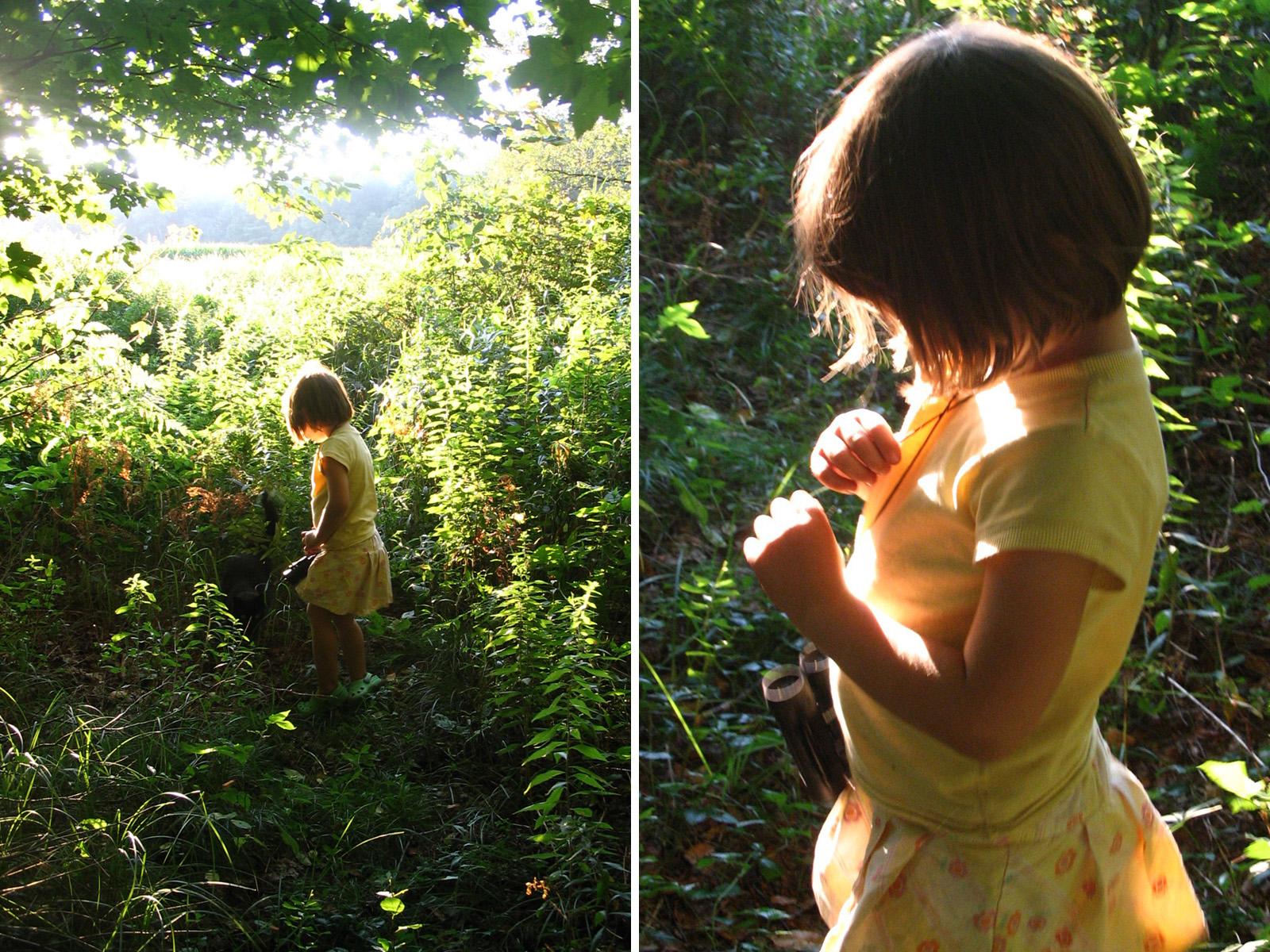
As the yellow warmth of summer fades to the chilly brown of autumn, Lil and I grasp at the few moments left of our favorite season. This morning we discovered my great-grandfather Wilson Davidson’s binoculars in the closet, and Lillia was dying to try them out. I was a little nervous about handing a family heirloom over to a three-year-old, but I let her play with them for a bit. She wanted to take them to school, but I wasn’t thrilled about the idea of exposing a priceless antique to a group of preschoolers. Thankfully, the binoculars are housed in a really neat peach-colored carrying case (a perfect recepticle for plastic animals). I convinced her to take just the case to school—she put a frog into it and was happy.

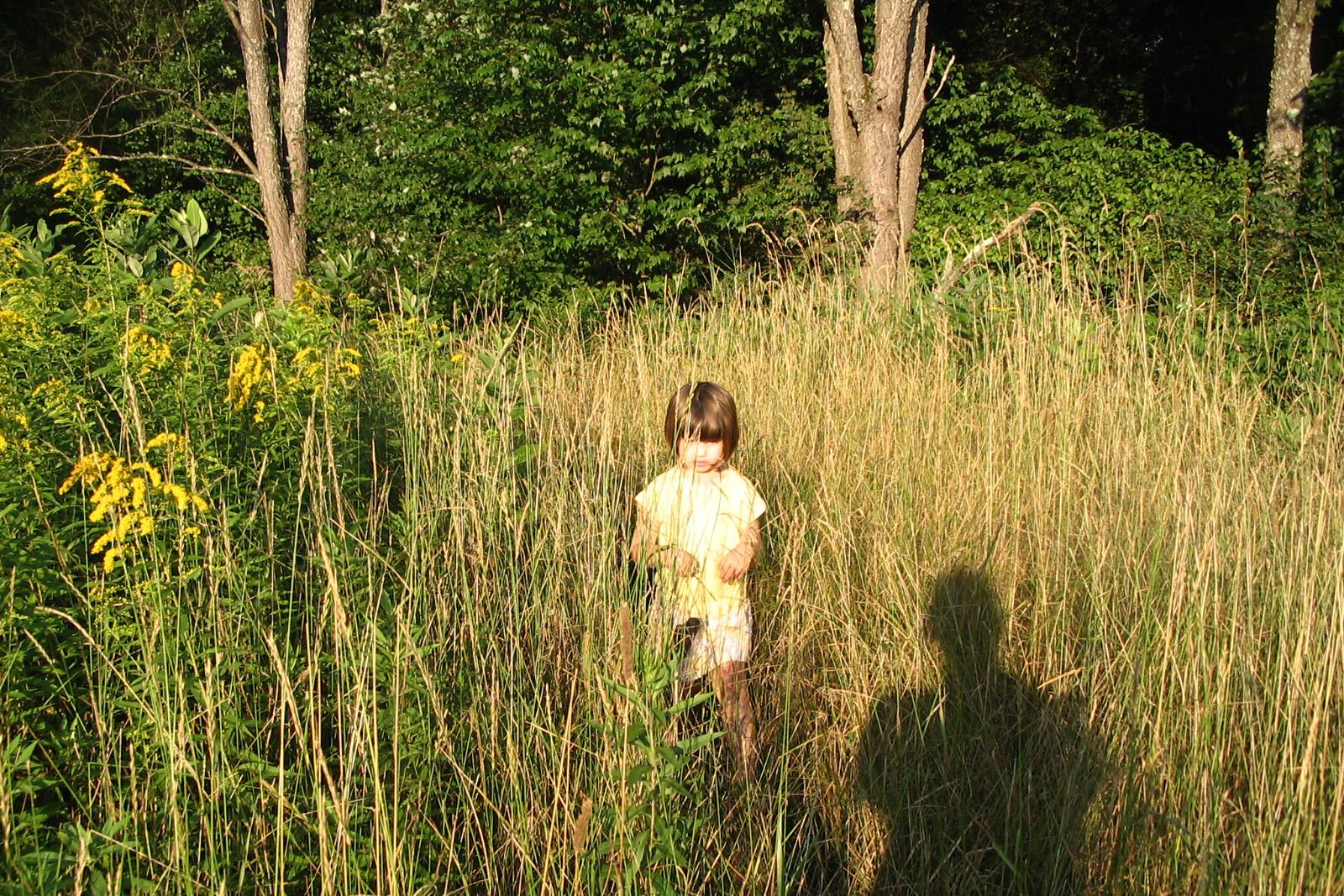
After dinner we set out through to woods to the meadow under the guise of acquiring caterpillar food, but we were going mostly to test binoculars. I couldn’t face another evening stuck in the house, knowing that summer was slipping by and would soon be gone. I feel like my childhood summers were more carefree than the ones I am able to offer to Lillia. Part of that is because my mother didn’t work, so our schedule was loosely defined. Another reason is that Lillia doesn’t have anyone her own age to play with most of the time, so parents and grandparents have to be substitute playmates. And, we’re tired, so we’re not much fun.

For a few moments in the meadow I remembered what it was like to have no worries; to have no anxiety about the future because I had no concept of anything beyond what was happening at that very moment. Why is it so hard to access that state of mind once we become adults? Is it simply a matter of exercising the ability to let go, or is there something that happens to us after we’ve lived in the world long enough? We analyze our world until it breaks apart, and we can never again render it as a whole space. It is sad that we must experience our world in pieces—we are guaranteed to miss so much that way. It is like using a grain of sand to try and understand the immensity of a boulder. We are finite beings, and there are too many grains of sand.

From an essay that Damian sent me, “The Sacred and the Human” by Roger Scruton:

. . . the moments when time stands still, when we look on the world from a point at its edge, when we experience our dependence and contingency, and when we are apt to be filled with an entirely reasonable awe.

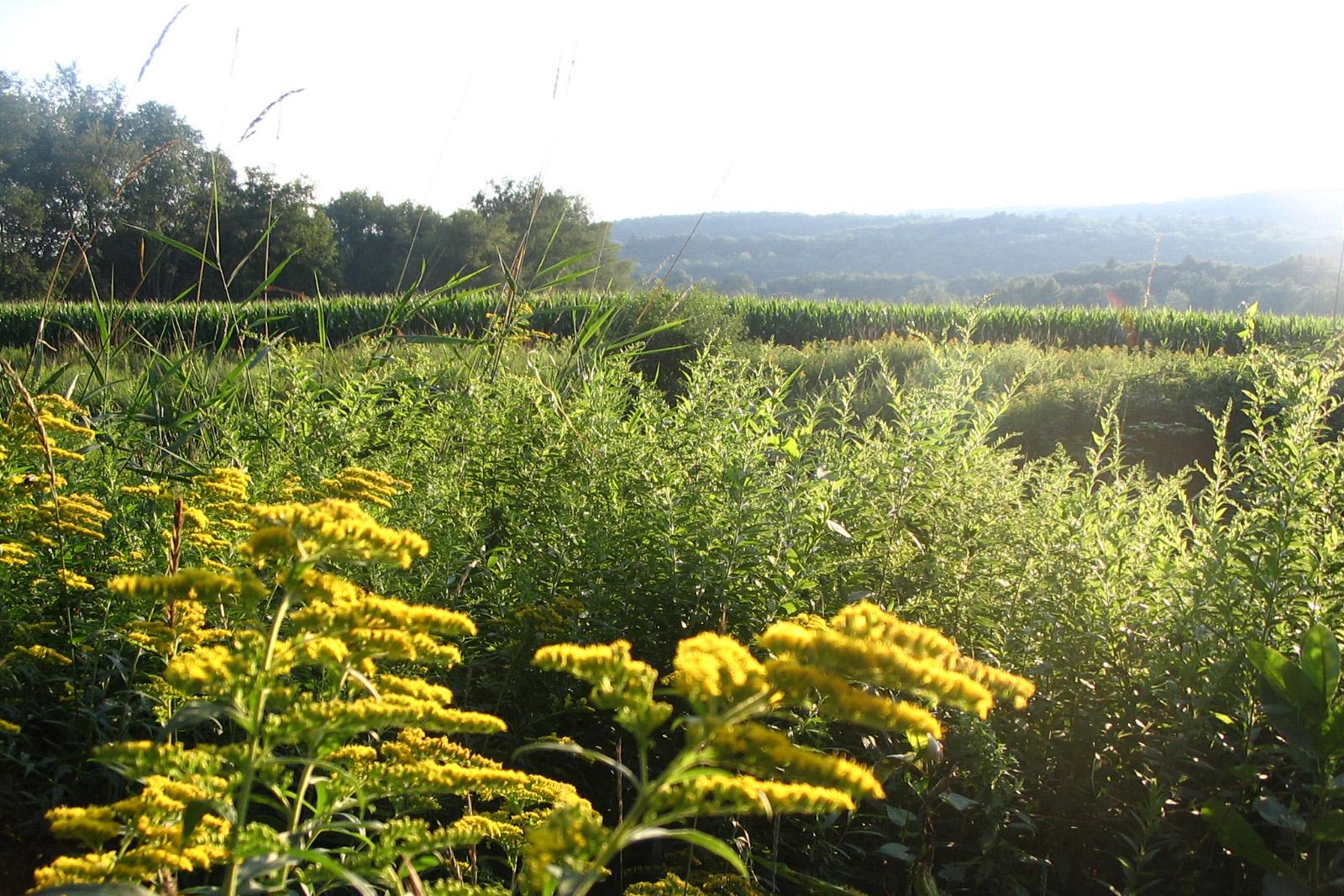
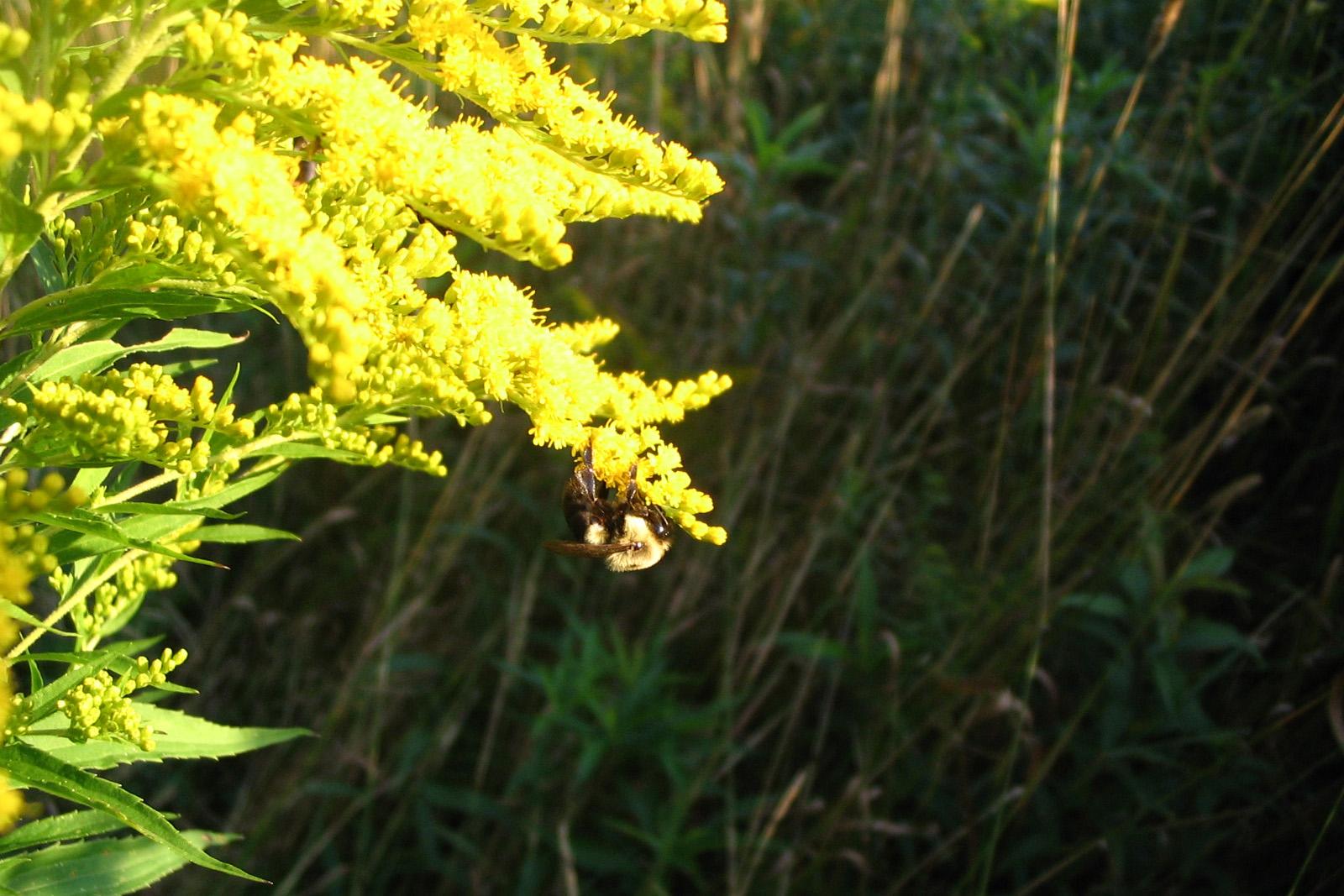
I watched Lil weave her way through the tall grass, struggling to keep her balance in the green, and I thought about all the ways we try to fill our children’s days, when the simplest things are sometimes all that they really need. I have always said I don’t want to be one of those parents that micro-manages her kid’s life, or who has some activity or another planned for every day of the week. What kind of childhood is that? Lillia has enough structure in her day at school. I think what she really needs at the end of the day is the same thing that I need: A chance to do nothing; to chill; to get away from it all; to space out; to watch the sun set on a field of corn; to watch a bee gather pollen; to wander through the woods, enjoying the world into which we are all born.